The Best Days of WordPress Are Ahead
WordPress is not a relic of the web we lost. It is one of the few open foundations strong enough to help build the web that comes next.
WordPress was once a creative force.
It gave power to individuals. It gave people a place to write, publish, build, sell, teach, experiment, and belong.
It welcomed people who cared about content, freedom, expression, ownership, and the strange beauty of making something that was truly their own.
For many of us, WordPress was not just software. It was a door into the web. A place where a person, a small team, a local business, an artist, a writer, or a developer could create a home without asking permission.
But something changed
The tools multiplied. The feeling fragmented.
WordPress grew stronger, but sometimes felt less alive.
We got thousands of plugins, but lost the experience.
We optimized for speed, SEO, schemas, blocks, funnels, tracking, integrations, and automation — but forgot how it feels to use something beautiful.
The center disappeared.
Creators scattered across Discord servers, GitHub issues, plugin pages, Slack threads, support forums, private chats, newsletters, and abandoned roadmaps.
Fragmented conversation.
The places meant to gather us often started to feel less like a community and more like a registry.
Fragmented experience.
A directory. A list. A database of things. Useful, yes. Alive, not always.
Fragmented feeling.
WordPress does not lack power. It lacks the feeling that all this power is part of one living experience.
The platform detour
The web was told to move into someone else’s room.
The promise was always the same: everyone will be in one place.
For years, we were told that websites were becoming less important.
Put your company on a social network. Put your audience in a feed. Put your product in a marketplace. Put your community in a chat app. Put your content inside someone else’s platform. Put your identity wherever the algorithm can see it.
Portals promised it.
A single gateway. A controlled world. A web made smaller.
Social networks promised it.
An audience in one place, until the rules changed.
Marketplaces promised it.
Discovery, but surrounded by everyone else’s shelf.
Feeds promised it.
Visibility, but not permanence. Reach, but not ownership.
Platforms are useful for discovery. But they were never meant to be home.
A profile is not a home.
It can introduce you, but it cannot fully hold your world.
A feed is not a community.
It can move attention, but it cannot replace belonging.
A marketplace is not a brand.
It can list what you sell, but it cannot become what you mean.
The return of the website
The independent web did not disappear. It was waiting.
AI will not end websites. AI will raise the expectations for what a website can be.
When anyone can generate a page, the page itself is no longer enough.
When templates are everywhere, character matters more. When content becomes easier to produce, trust becomes more important. When interfaces become intelligent, static experiences will feel unfinished.
The future will not belong to websites that merely exist. It will belong to websites that respond, guide, remember, teach, connect, adapt, and feel alive.
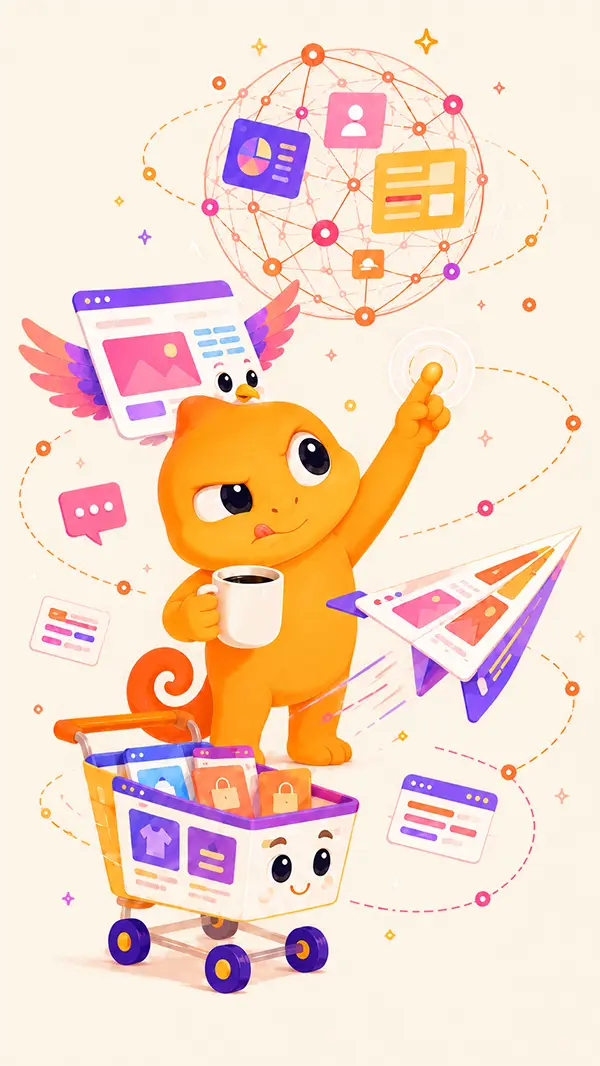
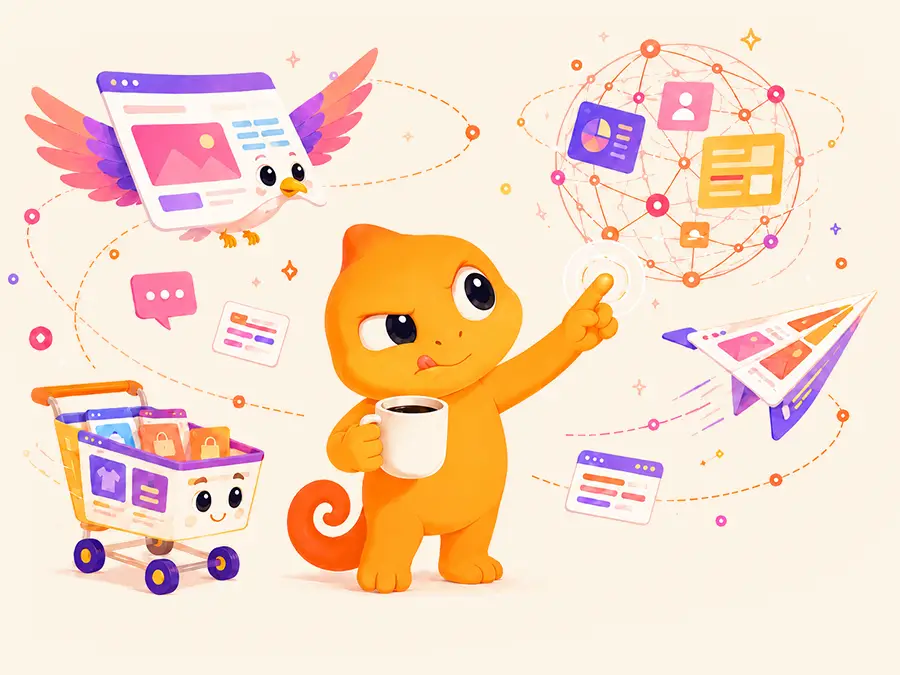
This is not the death of the website. This is the next beginning of the website.
Why WordPress still matters
WordPress is not finished. It is unfinished.
That is its weakness. That is its power.
Open
It belongs to no single company. It can be shaped by the people who use it.
Extensible
It can become a store, a magazine, a school, a community, a product, a home.
Human
It still carries the original promise: a place of your own, without asking permission.
What WordPress needs now
Not more noise. More rhythm.
More options are not the same as more agency.
Not enough
More plugins. More settings. More dashboards.
What matters now
Clarity. Warmth. Trust. Better daily workflows.
A tool can be technically correct and still feel cold. A plugin can be useful and still feel disconnected. An admin screen can work and still make people feel tired.
We believe this matters. Because software is not only what it does. Software is how it treats the person using it.
Tools
Our small beginning
We began where care usually begins — in the small things.
Not with a grand claim to own the future. Not with a promise to fix everything. Not with another loud platform.
We started small. With a family of small WordPress plugins designed to make the daily work of WordPress feel more comfortable, more clear, more understandable, and more human.
Some help creators understand how people experience their sites. Some help bring order to the admin area. Some help notice trust signals before a plugin becomes a problem. Some help keep notes, reminders, context, and small decisions close to the work itself.
Small things. But small things shape daily life.
The way a creator understands what visitors actually experience.
The way an admin menu feels calm instead of chaotic.
The way a trust signal appears before a plugin becomes a problem.
The way a small note keeps context close to the work itself.
A plugin can be more than a feature. It can be a gesture of care.
We call it the WPMC Plugin Family. Not because a family of plugins is the final answer. But because it is a beginning.
A beginning built from care. A beginning built from attention. A beginning built from the belief that WordPress can feel better without becoming less free.
We have only begun. And maybe that is the point.
Discovered together
The future of WordPress will not be written by one team.
It will not be decided in one roadmap, one product, one company, or one idea.
It will be discovered together.
By developers who still care about craft. By designers who still care about feeling. By writers who still care about voice. By agencies who still care about clients. By plugin makers who still care about the small details. By site owners who still want a place that belongs to them. By communities who still believe the web should be more than a feed.
We are not leaving WordPress. We are returning to what made it matter — and carrying it forward.
Statement of belief
This is not nostalgia. This is not a product launch.
This is a statement of belief.
The platform era tried to make the web smaller. The AI era can make it alive again.
The best days of WordPress are not behind us. They are waiting to be built.
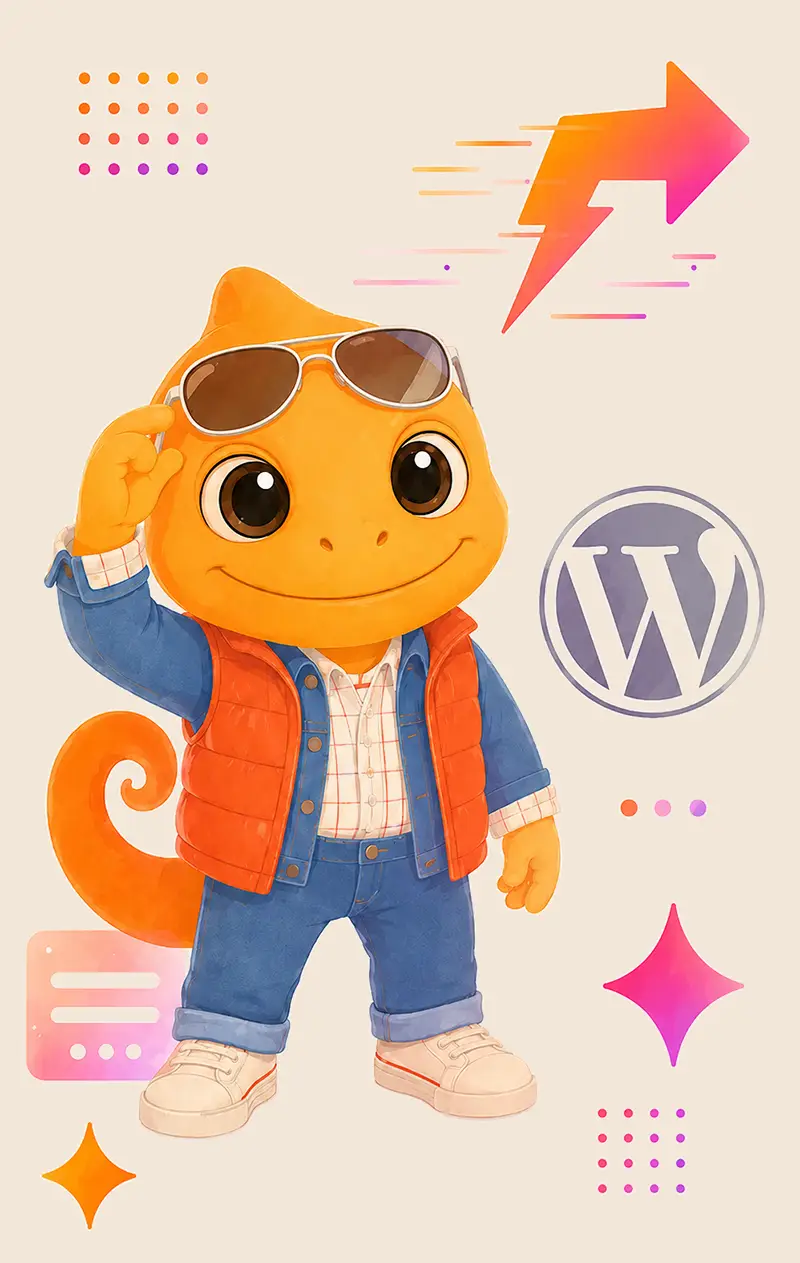
Back to the future of WordPress starts now.